Current Level 1: SNOWFLAKE Level-0
0 / 5 Miles
0 / 6 Assignments
0 / 5 Exams

📖 Course Miles: Passed Failed Pending Not Attempted

Mile 3: Architecture Simplified

🎬 YouTube Videos

No YouTube videos available

Check back later for new YouTube content.

📹 Library Videos

SNOWFLAKE ARCHITECTURE

📚 Content

SECTION 1 SNOWFLAKE ARCHITECTURE 

2 min read

Snowflake Architecture
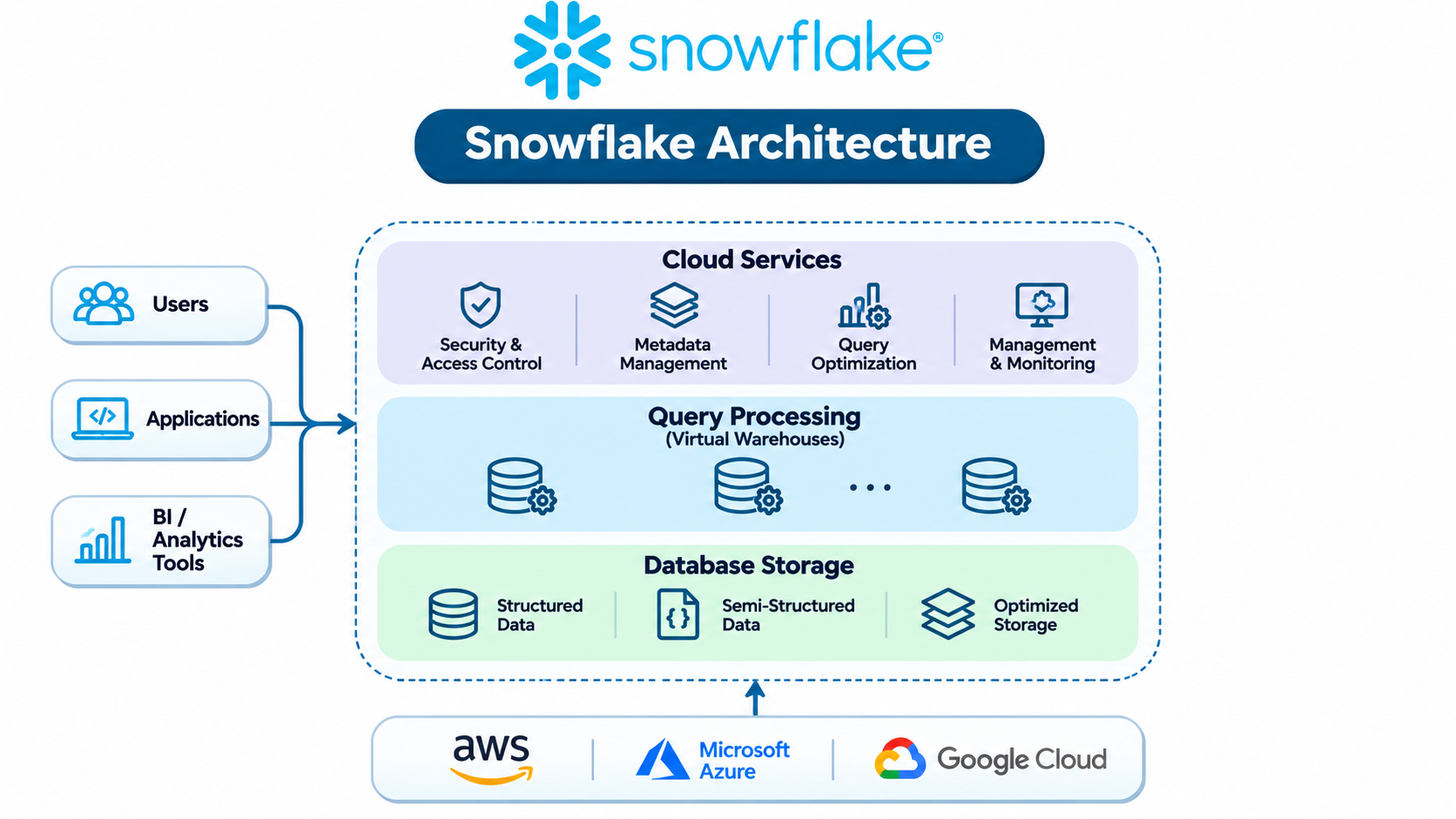
Snowflake uses a modern cloud-based architecture designed to store, process and analyze data efficiently. It separates storage and computing resources, allowing them to work independently.

Main Components of Snowflake Architecture
Snowflake architecture consists of three main layers:

1. Database Storage: Stores structured and semi-structured data in an optimized format.
2. Query Processing: Uses virtual warehouses to execute queries and perform data processing.
3. Cloud Services: Manages activities such as authentication, security, metadata and query optimization.


Key Features

  • Cloud-based architecture.
  • Separation of storage and compute.
  • Automatic scaling of computing resources.
  • Supports multiple users accessing data simultaneously.
  • Secure and efficient data management.

Real-World Example
An organization stores customer and sales data in Snowflake. When users run SQL queries to analyze this data, Snowflake uses its computing resources to process the queries and retrieve the required results.
Sign up or sign in to rate this section
SECTION 2 TRADITIONAL VS SNOWFLAKE  ARCHITECTURE 

1 min read

Traditional vs. Snowflake Architecture

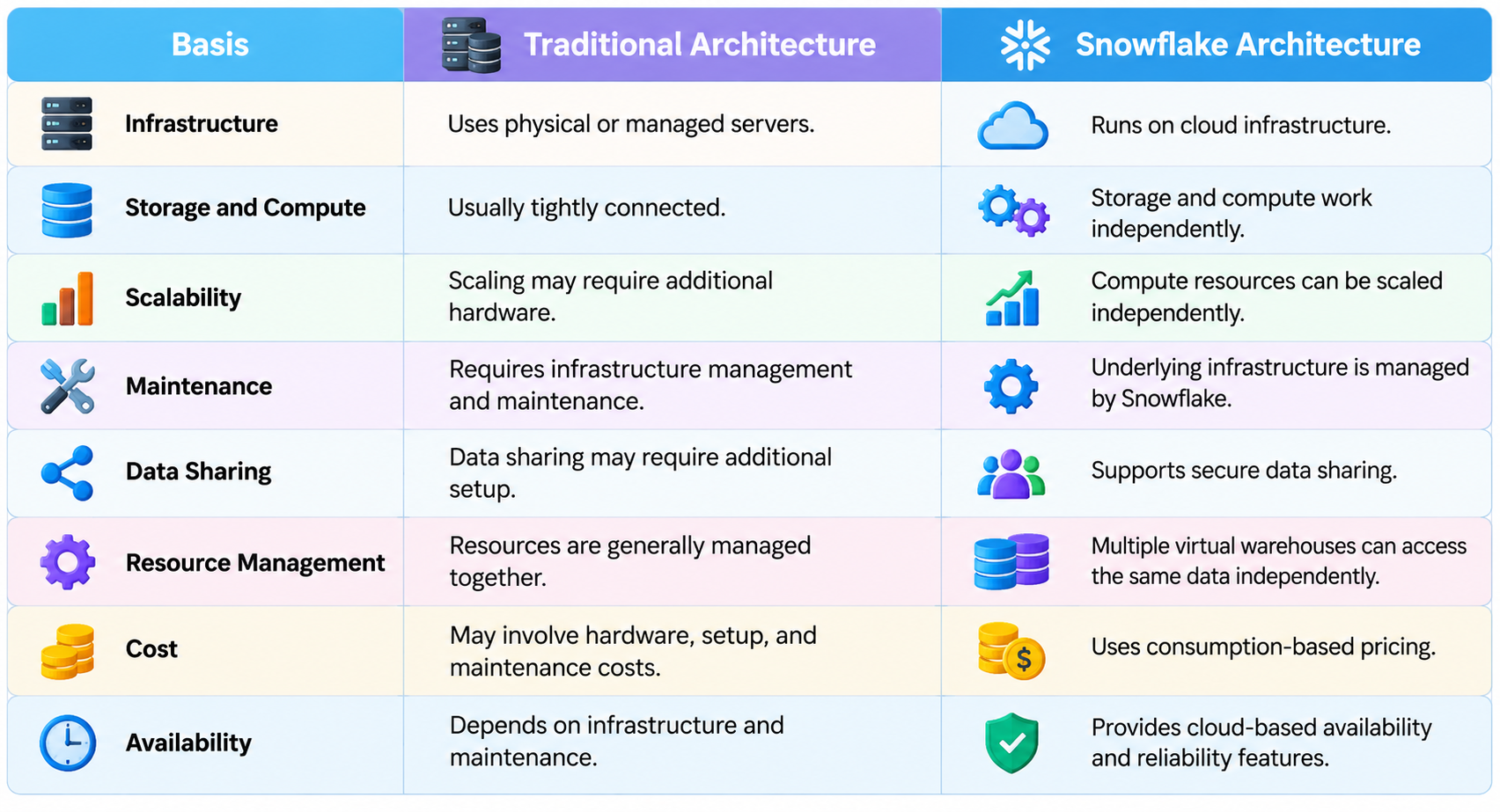
Traditional data warehouses and Snowflake differ in the way they manage infrastructure, storage, computing resources and data. Snowflake uses a cloud-based architecture that provides greater flexibility and scalability.

The following table highlights the major differences between traditional architecture and Snowflake architecture.


Key Takeaways

  • Traditional architecture generally requires more infrastructure management.
  • Snowflake runs on cloud infrastructure.
  • Snowflake separates storage and compute resources.
  • Multiple virtual warehouses can access the same data independently.
  • Snowflake makes scaling and data management more flexible.
Sign up or sign in to rate this section
SECTION 3 LAYERS OF ARCHITECTURE 

2 min read

Layers of Snowflake Architecture
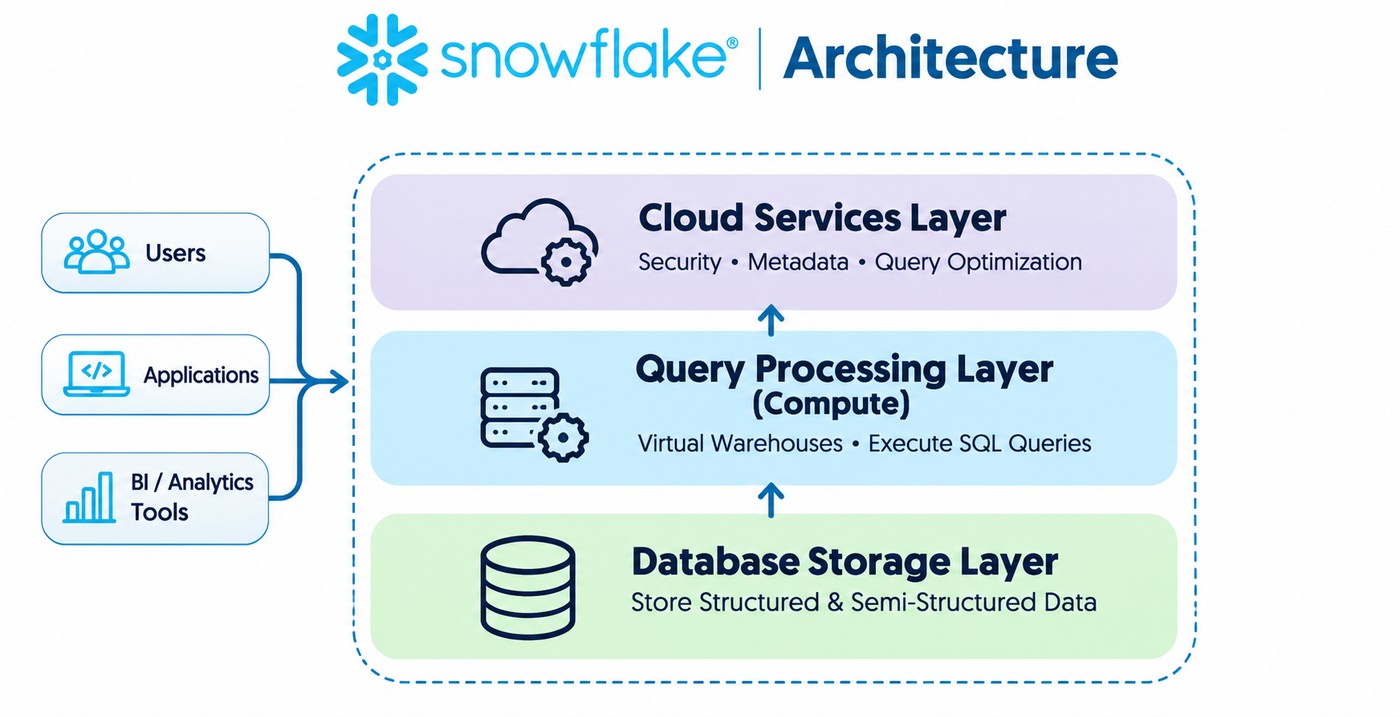
Snowflake architecture consists of three main layers that work together to store, process and manage data efficiently.

Three Main Layers
1. Database Storage Layer
2. Query Processing Layer (Compute Layer)
3. Cloud Services Layer

1. Database Storage Layer
The Database Storage Layer is responsible for storing data in Snowflake.

  • Stores structured and semi-structured data.
  • Organizes data into databases, schemas and tables.
  • Automatically divides stored data into smaller units called micro-partitions.
  • Handles data storage and optimization.

2. Query Processing Layer (Compute Layer)
The Query Processing Layer is responsible for executing SQL queries and processing data.

  • Uses Virtual Warehouses to perform query processing.
  • Each query runs using the computing resources of a virtual warehouse.
  • Multiple virtual warehouses can operate independently.
  • Compute resources can be scaled according to workload requirements.

3. Cloud Services Layer
The Cloud Services Layer manages and coordinates different activities within Snowflake.

  • Handles user authentication and access control.
  • Manages metadata and query optimization.
  • Coordinates query execution.
  • Provides security and infrastructure management.
  • Supports activities such as transaction management and data sharing.

How the Three Layers Work Together

  1. Database Storage Layer stores the data.
  2. Query Processing Layer processes the data.
  3. Cloud Services Layer manages and coordinates the platform.
Sign up or sign in to rate this section
SECTION 4 SEPARATION OF STORAGE AND COMPUTE

3 min read

Separation of Storage and Compute
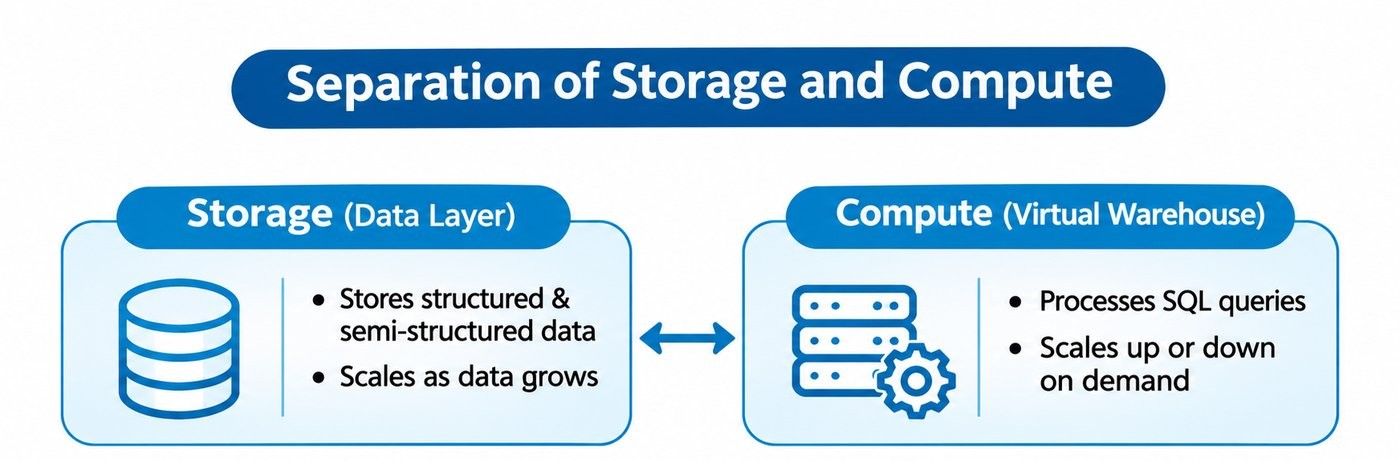
Snowflake follows a unique architecture in which data storage and computing resources work independently. This means users can store data and process queries using separate resources.

1. Storage
Storage is responsible for storing data in Snowflake.

  • Stores structured and semi-structured data.
  • Data is stored centrally in Snowflake.
  • Storage automatically manages data organization and optimization.
  • Storage capacity can grow as data increases.

2. Compute
Compute is responsible for processing queries and performing data operations.

  • Snowflake uses Virtual Warehouses for computing.
  • Virtual Warehouses execute SQL queries.
  • Compute resources can be increased or decreased according to workload.
  • Multiple virtual warehouses can access the same stored data independently.

How Storage and Compute Work Together

  • Data is stored in the Storage Layer.
  • A Virtual Warehouse accesses the stored data when a query is executed.
  • The Compute Layer processes the query and returns the result.
  • Storage and Compute can be managed and scaled independently.

Benefits of Separation

  • Independent Scaling: Storage and compute resources can scale separately.
  • Cost Optimization: Compute resources can be suspended when not in use, helping reduce compute costs.
  • Better Performance: Different virtual warehouses can process different workloads.
  • Resource Sharing: Multiple virtual warehouses can access the same data without creating separate copies.
  • Flexibility: Organizations can manage resources according to their requirements.
Sign up or sign in to rate this section

📝 Assignment

Available Assignments
Assignment Pass Mark Duration Actions
Architecture of Snowflake
70% 01:00:00

📊 Exam

Available Exams
Exam Pass Mark Duration Questions Actions
Architecture of Snowflake
70% 00:30:00 5

💬 Comments & Discussion

Sign up free or sign in to post a comment
Sign up free or sign in
No comments yet

Be the first to share your thoughts!