Current Level 0: Microsoft Fabric—Level 0
0 / 6 Miles
0 / 6 Assignments
0 / 7 Exams

Mile 1: MS Fabric Data Engineering Basics.

🎬 YouTube Videos

No YouTube videos available

Check back later for new YouTube content.

📹 Library Videos

Basic Of Data Engineering

📚 Content

SECTION 1 INTRODUCTION TO DATA  

3 min read

Introduction to Data

Objective
Understand what data is and how it is used before learning Microsoft Fabric.

What is Data?
Data is raw information collected about customers, products, sales, employees, systems, or events.
Data can be stored, processed, transformed, and analyzed to produce useful information.

Example:
Customer Name: Emma
City: New York
Purchase Amount: $500


Types of Data

1. Structured Data
Structured Data is organized in a fixed format, usually in rows and columns.

Example:
CustomerID | Name | City | Purchase Amount
101 | Emma | New York | $250
102 | Daniel | London | $500
103 | Olivia | Sydney | $320

Common Examples: SQL tables, CSV files, Excel files.

2. Semi-Structured Data
Semi-Structured Data does not use a traditional rows-and-columns format, but it still has some organization using keys, values, or tags.

Example:
CustomerID: 101
Name: Emma
City: New York
Amount: $250

Common Examples: JSON and XML.

3. Unstructured Data
Unstructured Data does not have a predefined table structure.

Common Examples:
Images
Videos
Audio files
PDF documents
Text documents


From Data to Business Insights
Companies collect raw data, but raw data alone is not enough.
It needs to be stored, prepared, and analyzed.
Data → Store → Process → Analyze → Business Insights

Example:
Sales Data → Store in a Data Platform → Clean and Transform → Analyze Sales → Make Better Business Decisions


Key Point
Raw Data → Useful Information → Business Insights
Data is the starting point, and tools such as Microsoft Fabric help us store, process, transform, and analyze that data.

Sign up or sign in to rate this section
SECTION 1 DATABASE FUNDAMENTALS

3 min read

What is a Database?
Objective: Understand where structured business data is commonly stored.

What is a Database?
A database is an organized collection of data that allows us to store, manage, and retrieve information.

Example:
A Sales Database can contain:
Customer Table
Product Table
Sales Table


How is Data Stored in a Database?
In a database, structured data is commonly organized into tables.
A table contains rows and columns.

Table – Stores related data.
Row – Represents one record.
Column – Represents one attribute.

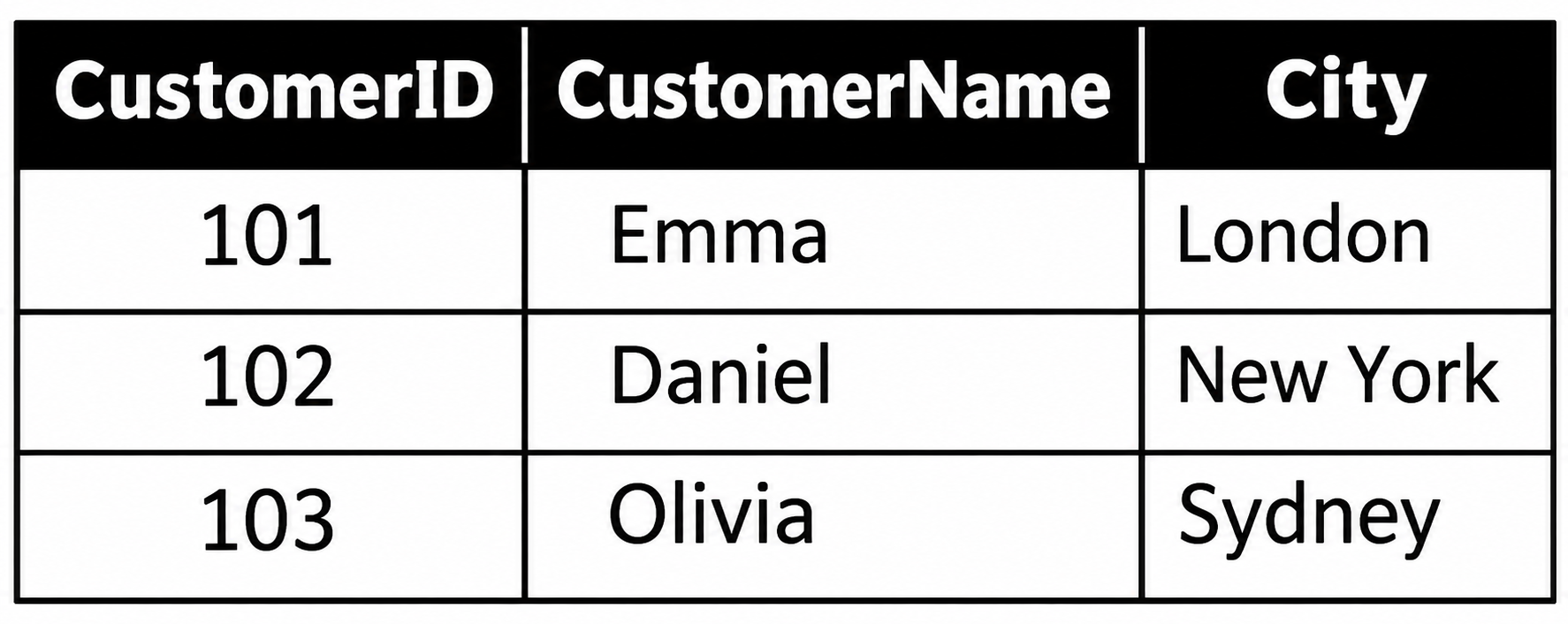
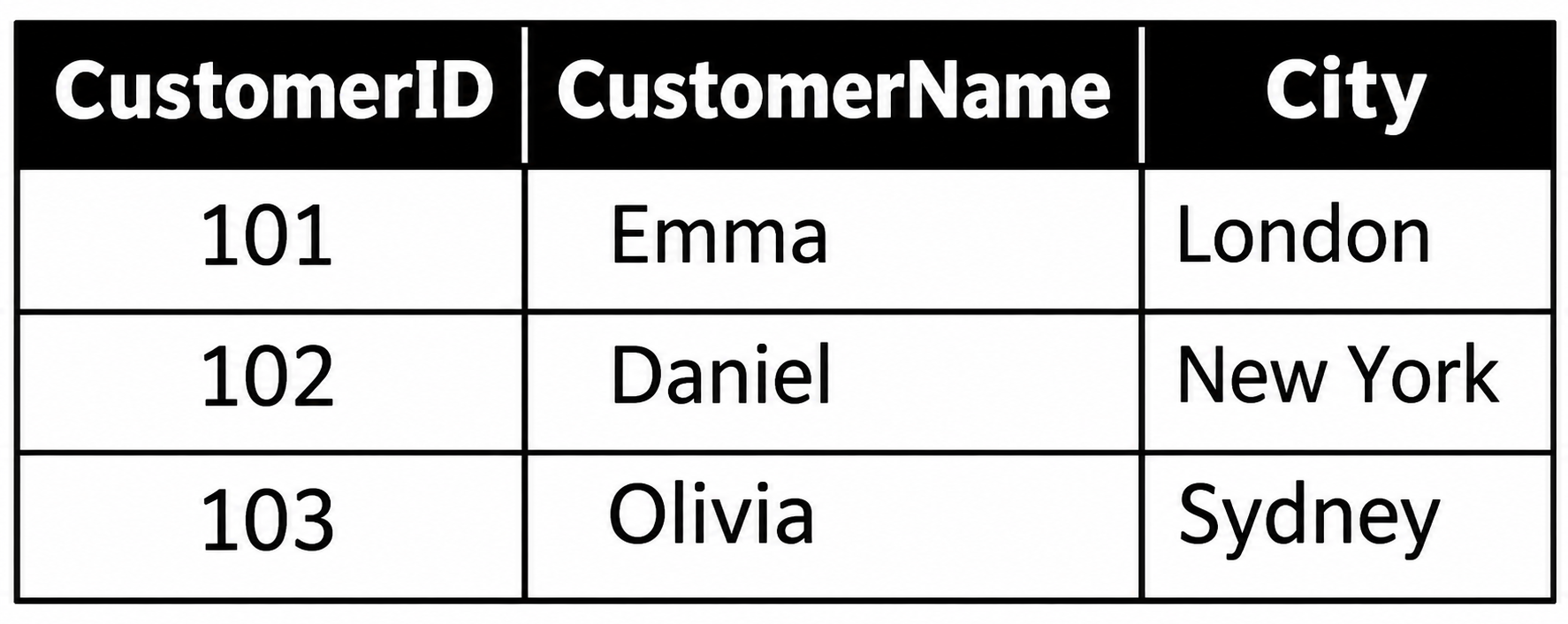
Example

Here:
CustomerID, CustomerName, and City are Columns.
The complete Emma record is a Row.


What is a Primary Key?
A Primary Key uniquely identifies each record in a table.
Each Primary Key value should identify a specific record.

Example:
CustomerID can be used as the Primary Key of the Customer table.

Here, CustomerID helps uniquely identify each customer.


Simple Way to Remember
Database → Contains Tables
Table → Contains Rows and Columns
Row → One Record
Column → One Attribute
Primary Key → Uniquely Identifies a Record


Key Point
Database → Tables → Rows + Columns
Databases are commonly used to store structured business data in an organized format so that the data can be easily stored, managed, and retrieved.


Sign up or sign in to rate this section
SECTION 2 DATA ENGINEERING FUNDAMENTALS

2 min read

What is Data Engineering?
Data Engineering is the process of collecting, moving, transforming, and preparing data so it can be used for analytics and reporting.

Simple Data Engineering Architecture
Data Sources → Data Ingestion → Transformation → Storage → Reporting

Example:
Customer Data → Collect Data → Clean Data → Store Data → Create Reports


What is ETL?
ETL stands for Extract, Transform, Load.
Extract → Transform → Load

  • Extract – Collect data from source systems.
  • Transform – Clean and modify the data.
  • Load – Store the processed data in the target system.

Example:
Azure SQL → Clean Data → Data Warehouse


What is ELT?
ELT stands for Extract, Load, Transform.

  • Extract – Collect data from source systems.
  • Load – Load the raw data into the target platform.
  • Transform – Process and transform the data after loading.

Example:
Source → Lakehouse → Transform Data


ETL vs ELT
ETL: Transformation happens before loading.
ELT: Data is loaded first and transformed afterward.

Simple Way to Remember:

  • ETL → Transform First → Load Later
  • ELT → Load First → Transform
Sign up or sign in to rate this section

📝 Assignment

Available Assignments
Assignment Pass Mark Duration Actions
MS_Fabric_Data_Engineering_Basics
70% 01:00:00

📊 Exam

Available Exams
Exam Pass Mark Duration Questions Actions
Data Engineering Basics
70% 00:30:00 All

💬 Comments & Discussion

Sign up free or sign in to post a comment
Sign up free or sign in
No comments yet

Be the first to share your thoughts!